Time tracking
What does AgencyFlo's time tracking do?
Why your agency needs time tracking. Time that feeds straight into profitability.
Time that feeds straight into profitability.
Logged time updates project margin and invoices automatically, no exports, no reconciliation.
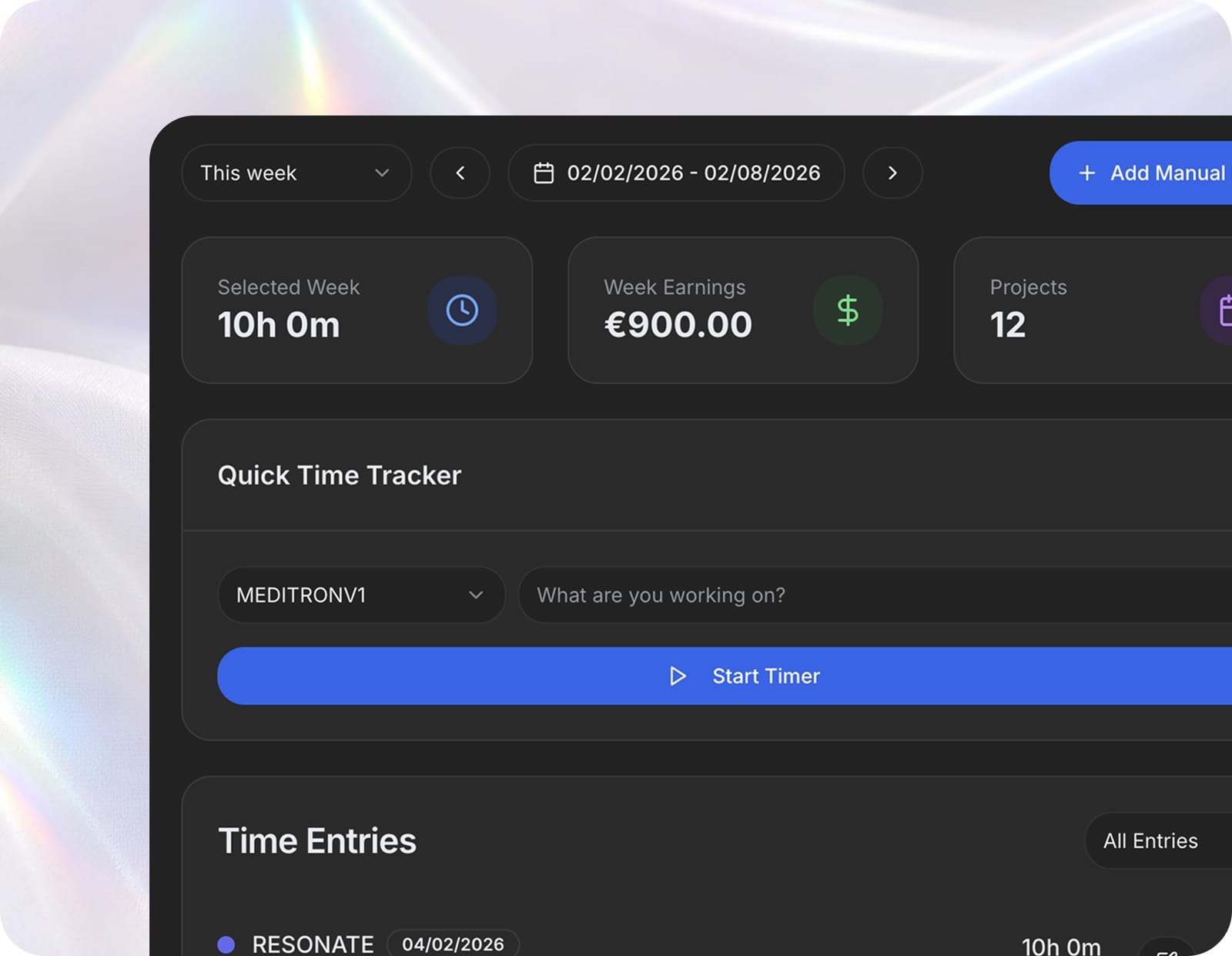
Connected to the whole loop
Nothing here is a silo. Changes flow to projects, invoices and your P&L automatically, so the rest of the system stays in sync without manual re-entry.
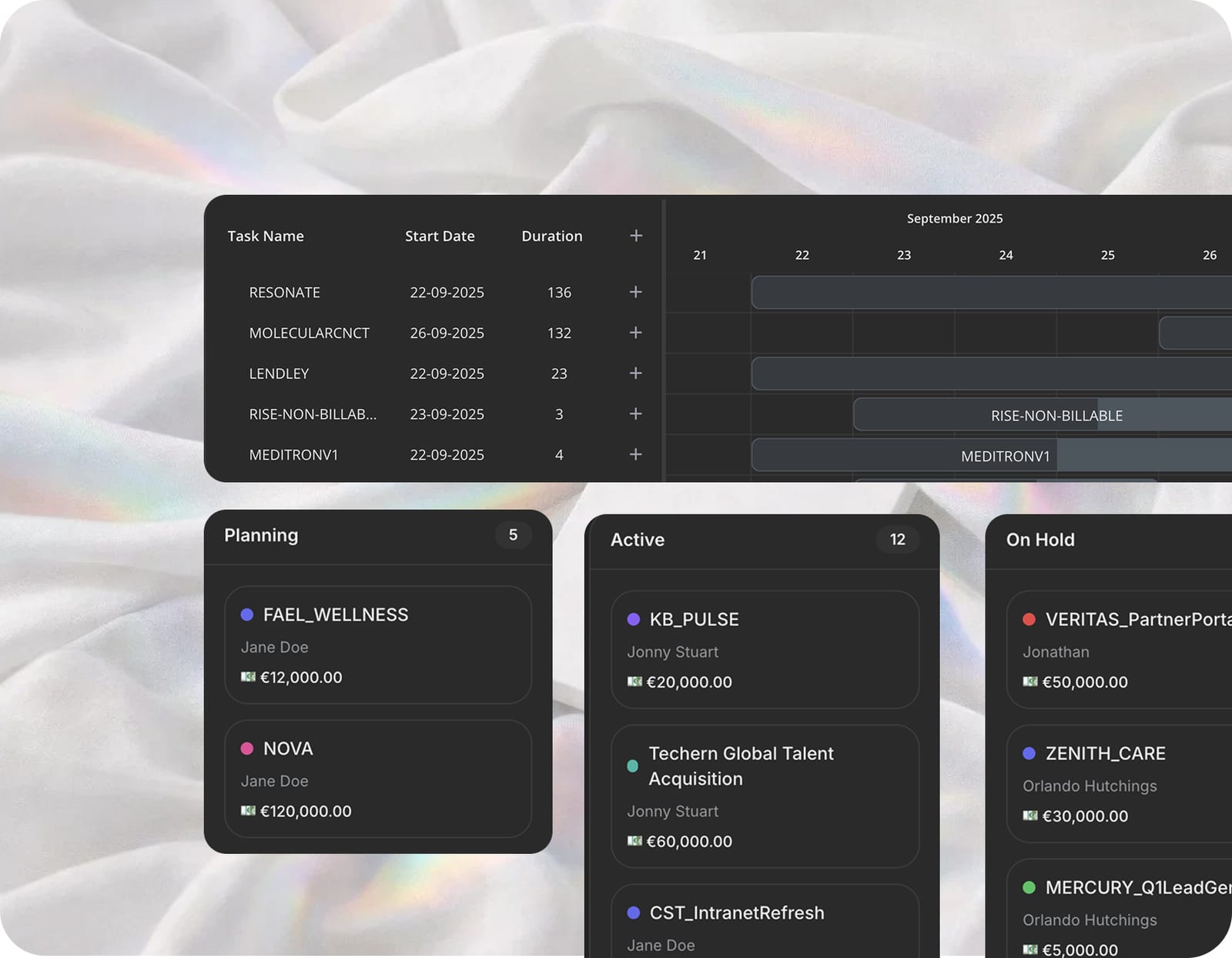
No stitched-together stack
Replace the patchwork of single-purpose tools with one operating system, so your team spends time on client work instead of moving data between apps.
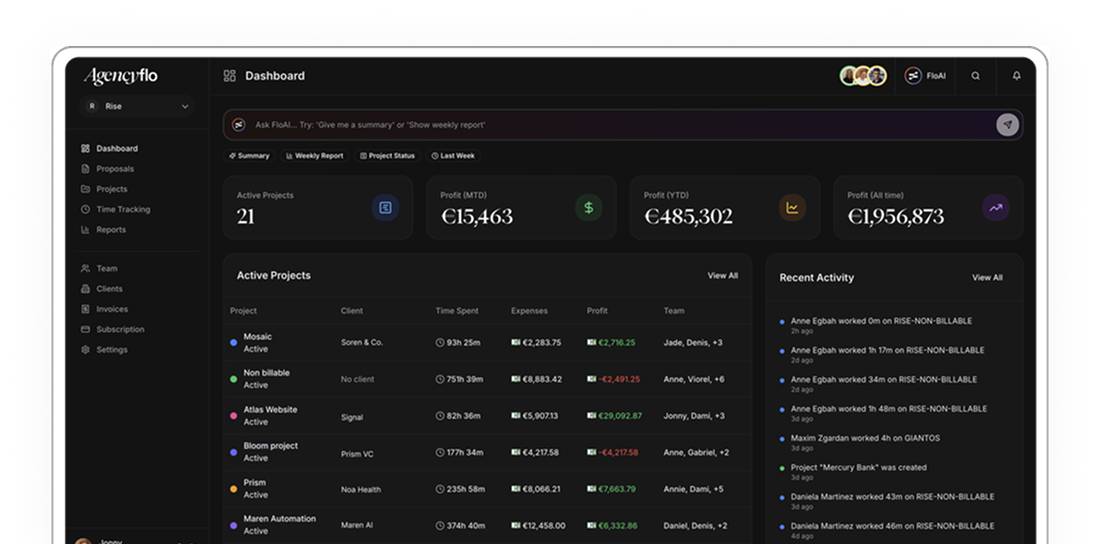
Why a standalone timer creates work
Toggl and Harvest count hours, then leave you to move them somewhere they matter. The export lands in a finance tool or a spreadsheet, gets reconciled against projects, then finally touches margin. Every hop is a place numbers drift. In AgencyFlo the timer is part of the system, so the hour you log is already against the project, the budget and the invoice.
One entry, four places
A single time entry updates the task, the project budget, the margin dashboard and the draft invoice at once. Mark it billable or non-billable and utilisation reports adjust on both sides. There's no weekly export, no reconciliation pass and no second seat to pay for a timer. The hour is logged once and counts everywhere it should.
Hours that become an invoice
When a project is ready to bill, every billable entry in the period drafts into an invoice, grouped by task or service line. The owner reviews, adjusts and sends. Marking it paid closes the loop back to project margin and the agency P&L with nothing re-keyed. The same hour that planned the work also bills the work.
Frequently asked questions
How accurate is AgencyFlo's time tracking?+
Time entries in AgencyFlo update project margin in real time as soon as they land, with no nightly sync or month-end reconciliation. Logged hours match the project, client and billable rate they were entered against, so revenue, cost and margin per project are always current. The accuracy depends on the team logging time honestly, but the platform removes every other friction that usually causes drift.
Does time tracking work offline?+
Time entries can be logged retrospectively from the dashboard, so a designer who didn't track Wednesday's session can add it Thursday morning. There's no native offline mode that captures hours automatically; the team enters them when they're back online. Most agencies on AgencyFlo use a once-a-day or once-a-week pattern rather than a real-time stopwatch.
Can I track billable and non-billable time separately?+
Yes. Every time entry in AgencyFlo carries a billable flag, so internal work, admin and pitch time stay separate from client-billable hours. The dashboard reports utilisation against both, and invoices pull only the billable entries by default. Toggling a task between billable and non-billable updates its history without losing the underlying log.
How is AgencyFlo's time tracking different from Toggl or Harvest?+
Toggl and Harvest are standalone timers; the hours export into whatever finance or project tool the agency runs separately. In AgencyFlo, the same time entry updates the task, the project budget, the margin dashboard and the draft invoice in one step. There's no export, no reconciliation, and no second seat to pay for a timer.
Can time entries flow straight into an invoice?+
Yes. When a project is ready to bill, AgencyFlo pulls every billable time entry in the period into a draft invoice, grouped by task or service line. The owner reviews, adjusts and sends. Marking the invoice paid closes the loop back to the project margin and the agency P&L without re-keying any numbers.

Operate and grow your agency, the right way.
The only tool your agency needs to run faster with less and make more money.